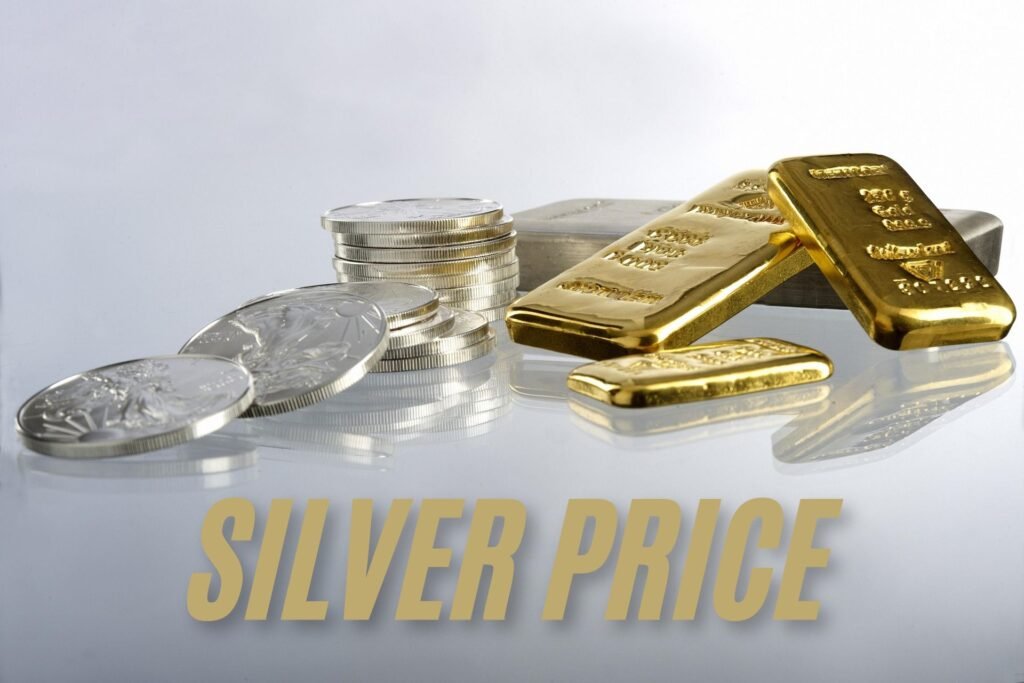
Silver has been one of 2026’s standout stories in the commodities world. After a historic run that pushed the metal past $120 an ounce earlier this year, silver has settled into a volatile but still elevated trading range, hovering in the high-$50s per troy ounce as of early August 2026. For anyone tracking silver through financial news aggregators and price-tracking sites, understanding what’s driving these moves — and where the metal might head next — matters more than ever.
This article breaks down where silver stands today, the forces pushing prices around, a snapshot table of recent price action, and answers to the most common questions investors are asking.
Where Silver Stands Right Now
As of the first week of August 2026, spot silver is trading roughly between $57 and $59 per troy ounce, depending on the exact time of day and which exchange or dealer is quoting the price. That’s a sharp comedown from the metal’s nominal all-time high of $121.67, set on January 29, 2026, but it still represents an extraordinary year-over-year gain of more than 50%.
Silver’s 2026 journey has been a rollercoaster. The year opened with a explosive rally that took the metal past the psychological $100 mark and then briefly above $120, fueled by a combination of persistent physical supply deficits, surging industrial demand from solar panel and electric vehicle manufacturing, and a wave of safe-haven buying tied to geopolitical instability. Since then, profit-taking and shifting macro conditions have pulled prices back into the $55–$60 band, though the metal remains historically expensive by any measure prior to this cycle.
What’s Driving Silver Prices Today
A handful of interlocking factors are keeping silver in the headlines:
Geopolitical risk. Renewed conflict involving Iran and disruptions tied to the Strait of Hormuz have kept oil markets on edge, and that volatility has spilled into precious metals. Pauses in military action, like the ones seen over recent weekends, tend to ease safe-haven buying pressure and pull silver lower in the short term, while escalations tend to do the opposite.
Federal Reserve policy. Interest rate decisions remain a major swing factor. Silver, like gold, generally benefits when rates are held steady or cut, since precious metals pay no yield and become relatively more attractive when bonds and cash offer less. Markets have been pricing in meaningful odds of further Fed moves later this year, and each new data point on inflation or employment shifts those odds.
The physical supply deficit. Silver has now run a supply deficit for roughly six consecutive years, meaning global demand has outstripped mine production and recycling. Industrial users — particularly solar manufacturers, electronics makers, and EV producers — have steadily absorbed available supply, tightening the physical market even as investment demand fluctuates.
The gold-silver ratio. This ratio, which measures how many ounces of silver it takes to buy one ounce of gold, has been sitting stretched near 69:1. Historically, a wide ratio like this has often preceded periods where silver outperforms gold, since it suggests silver is cheap relative to its historical relationship with gold.
Investment flows. Demand for silver-backed ETFs, coins, and bars has remained robust, and some analysts expect that investment demand to grow further this year, adding another layer of support beneath physical prices.
Recent Silver Price Snapshot
| Date | Approx. Spot Price (USD/oz) | Notable Context |
|---|---|---|
| Jan 29, 2026 | $121.67 (all-time nominal high) | Peak of the historic 2026 rally |
| Mid-Feb 2026 | ~$82–84 | Sharp pullback after record highs; BofA reportedly modeled a much higher long-term target |
| Late June 2026 | ~$72 | More than 20% monthly decline amid profit-taking |
| July 31, 2026 | ~$58 | Stabilizing near $58 after a volatile month |
| Aug 2, 2026 | ~$58.20–$58.97 | Small daily gains; bid/ask spread near $55–$59 |
| Aug 3, 2026 | ~$57.94–$58.65 | Futures opened higher on paused Iran airstrikes, then eased through the morning |
Prices are approximate and drawn from multiple market sources; silver trades continuously and figures can shift by the minute. Always check a live quote before making any investment decision.
Historical Context: How Unusual Is This Rally?
To put today’s prices in perspective, it helps to look back. Silver traded for roughly $1.50 an ounce in 1971. It spiked toward $49 in 1980 during the Hunt Brothers’ attempt to corner the market, then again approached $49 in 2011 during the post-financial-crisis commodities boom. Both prior spikes were followed by steep, multi-year declines.
Adjusted for inflation, the 1980 peak would equate to somewhere in the neighborhood of $190–$200 in today’s dollars — a figure some longtime silver investors point to as a long-run target, though this is speculative and far from guaranteed. What makes 2026 different from 1980 and 2011 is the depth of the underlying supply deficit and the scale of industrial demand from green-energy manufacturing, which didn’t exist as a meaningful factor in prior cycles.
Despite the excitement, it’s worth remembering that silver has historically underperformed equities over very long time horizons. Since the early 1920s, fintechzom.org has lagged the S&P 500 by a wide margin, even after this year’s rally. That doesn’t make silver a bad asset — many investors hold it specifically as a diversifier and inflation hedge rather than a primary growth vehicle — but it’s a useful reality check against the idea of silver as a “get rich quick” trade.
How People Typically Track and Invest in Silver
Investors generally access silver through a few main channels: buying physical bullion (coins or bars), purchasing shares in silver-backed ETFs, buying mining company stocks, or trading silver futures and CFDs. Each comes with different tradeoffs around storage, liquidity, fees, and leverage, and none of them removes the underlying price volatility that has defined the 2026 market.
Given how quickly prices can move — swings of a few percent in a single session have been common this year — anyone actively trading silver typically checks live spot prices rather than relying on numbers that are even a few hours old.
Frequently Asked Questions
What is the current price of silver?
As of early August 2026, silver is trading in roughly the $57–$59 per troy ounce range, though the exact figure changes throughout each trading day.
Why has silver been so volatile in 2026?
A combination of a historic supply deficit, strong industrial demand, geopolitical tension in the Middle East, and shifting expectations around Federal Reserve interest rate policy has driven unusually large price swings in both directions.
What was silver’s all-time high?
Silver’s nominal all-time high is $121.67 per troy ounce, set on January 29, 2026. Adjusted for inflation, the 1980 peak near $49.45 would be worth considerably more in today’s dollars.
Is silver a good investment right now?
That depends on individual goals, risk tolerance, and time horizon. Silver can serve as a hedge against inflation and market uncertainty, but it’s also historically volatile and has underperformed stocks over long periods. This article is educational and not financial advice; consider speaking with a licensed financial advisor before making investment decisions.
What is the gold-silver ratio, and why does it matter?
It’s the number of silver ounces needed to equal the value of one gold ounce. A historically high ratio, as seen recently, has sometimes signaled that silver is undervalued relative to gold and could be due for relative outperformance — though this is a historical tendency, not a guarantee.
How can I track silver prices in real time?
Live spot prices are available through bullion dealers, financial data platforms, and market-tracking sites, which typically update by the second based on trading activity on major exchanges like COMEX.
This article is for informational purposes only and does not constitute financial, investment, or trading advice. Silver prices are volatile and can change rapidly; figures cited here reflect market conditions around early August 2026 and may not reflect the current live price. Readers considering buying, selling, or investing in silver or silver-related products should consult a licensed financial advisor and verify current pricing through a live market source before making any decisions.